What Makes A Good Tennis Trading Opportunity?

A very common question I’m asked is:

“How do you decide which matches are worth trading?”

The simple answer is that there isn’t really a simple answer!

The first thing I would say is that you should not try to trade every match.

How you select which match to concentrate on depends on your experience.

In fact, one of the biggest improvements most new traders can make is to become more selective.

Some matches offer excellent trading opportunities.

Others are best left alone.

Learning the difference is an important part of becoming a consistent trader.

Puzzled guy
Puzzled

Not Every Match Is Worth Trading

Many beginners are desperate to be involved in the market.

This often leads to poor decisions and forced trades.

Professional traders understand that waiting for the right opportunity is part of the job.

There will always be another match.

One point that I would make here is that I discovered that I was rejecting matches based on price alone.
However, researching those matches thoroughly often highlights opportunities.

I Start With The Pre-Match Analysis

Long before the first ball is hit, I want to know as much as possible about the match.

Questions I ask include:

  • Who do I think is going to win?
  • How competitive will the other player be?
  • Is the market favourite’s price too low?
  • What is each player’s recent form?
  • Are there any injury concerns?
  • Does the surface favour one player more than the other?

The better the pre-match analysis, the easier it becomes to recognise opportunities once the match begins.

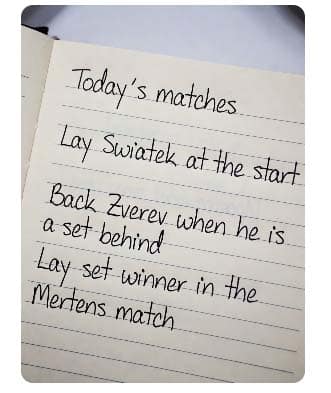
Pre match research.
Pre match research

Value Is More Important Than Picking Winners

Correctly picking the match winner can certainly make life easier for a trader. However, it isn’t essential.

Some of the best matches to trade are those where the outright winner isn’t obvious.

Instead, I’m looking for value. I am trying to take advantage of the price moves that can happen is relatively short periods of a match.

Sometimes the market overreacts to what happens during a match.

When that happens, there may be an opportunity to trade.

Finding value is much more important than simply predicting who wins.

Patience Is One Of Your Greatest Strengths

One of the hardest lessons for new traders is learning not to trade.

You don’t have to be involved in every match. Don’t rush into a trade if the value isn’t there.

Sometimes the best trade is no trade.

Patience can protect your trading bank. Sometimes a match will not give a suitable trade opportunity. Accept that fact and move on to the next one.

Pre-match analysis is important, but tennis is a dynamic sport.

Momentum can change quickly.

A player may start slowly before finding their rhythm.

An outsider may play well early on but struggle to maintain that level.

Rather than reacting emotionally, I prefer to let the match develop and see whether it creates the type of opportunity I was expecting.

I would be unusual for me to enter a trade at the start of a match unless the start price offered strong value. For example, at Wimbledon 2026, in the Quarter Final, Cobolli start at 1.45 against Fery, who I favoured to win a long match. I placed a lay on Cobolli just before the match started. Fery won in straight sets.

Have A Trading Plan

Before entering any trade, I already know:

  • Why I’m entering.
  • What I’m expecting to happen.
  • What I’ll do if the market moves against me.
  • Where I expect to take a profit.
  • When I’ll exit if the trade no longer makes sense.

Having a plan removes much of the emotion from trading.

Have a trading plan
Have a trading plan

Experience Makes Match Selection Easier

The more matches you watch and trade, the easier it becomes to recognise better quality opportunities.

You begin to notice recurring situations.

You become better at recognising when the market is overreacting.

Most importantly, you become more comfortable saying:

“This isn’t a match I want to trade.”

That confidence only comes with experience and discipline.

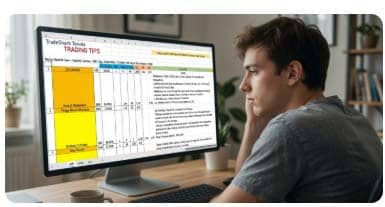
Before you have the experience to effectively research matches, you can use my Trading Tips service. I research every ATP and WTA match, every day.

Final Thoughts

Finding a good tennis trading opportunity isn’t about trading every match.

It’s about waiting for situations where the potential reward justifies the risk.

Good pre-match analysis, patience and discipline all play an important role.

Some of the best trading decisions you’ll ever make are the matches you choose not to trade.

If you would like to see how I analyse ATP and WTA matches before deciding whether to trade them, my daily Trading Tips service explains the reasoning behind each match. My TradeShark Tennis Trading Course also covers the methods and thought processes I use when identifying trading opportunities.

Other FAQ Articles

Can beginners learn Tennis Trading?

Why tennis trading is lower risk than betting

Why Trading Isn’t The Same As Betting

How To Manage Risk When Trading Tennis

What Makes A Good Tennis Trading Opportunity? 1

What Makes A Good Tennis Trading Opportunity? Read More »

How To Manage Risk When Trading Tennis

If you ask a trader for rules to follow when trading, the most common response is the advice to protect your bank.
This is of course good advice, if a little obvious. What they rarely tell you is how you should protect the bank.

Protecting your trading bank is more important than chasing big profits.

Many beginners spend most of their time looking for winning trades.

In reality, successful traders spend just as much time thinking about how they will manage risk if a trade doesn’t go as planned.

Every Trade Carries Risk

No matter how good a trading opportunity looks, there is never a guarantee it will be successful.

Players can get injured.

Momentum can change quickly.

A favourite can suddenly lose confidence.

Unexpected events happen in every sport.

Accepting this is one of the first steps towards becoming a better trader.

Think About The Downside First

Before entering any trade, I always want to know one thing:

“What will I do if this trade goes against me?”

Many beginners only think about the potential profit.

Professional traders think about the potential loss first.

Before entering a trade, you should have a plan for what you will do if it goes against you, as well as what you intend to do if the trade goes your way.

Assess the risk
Assess the risk

Small Losses Are Part Of Trading

One mistake many new traders make is trying to avoid taking a loss.

Unfortunately, that usually makes the situation worse.

Every successful trader has losing trades.

The difference is that experienced traders usually accept small losses rather than allowing them to become large ones.

You should be prepared to lose.

Protecting your bank gives you the opportunity to trade again tomorrow.

Don’t Chase Losses

This is one of the quickest ways to damage a trading bank.

After a losing trade, it can be tempting to increase your stakes or force another trade in an attempt to win the money back.

In my experience, this usually leads to poor decision-making.

The best traders remain patient.

If the next opportunity is there, take it.

If it isn’t, wait.

Successful traders recognise when a loss is affecting them more than is normal. They take a break, whether it is for an hour or for the rest of the day.

There will always be another match.

Take a break
Walk the dog

Choose Your Trades Carefully

Risk management starts before you even enter the market.

Not every tennis match offers a good trading opportunity.

Some matches are too unpredictable.

Some are just too one sided and offer few price fluctuations that were need for trading.

Others simply don’t suit the strategy you are using.

One of the most valuable skills you can develop is knowing when not to trade.

Sometimes the best decision is to leave a match alone.

I would rather be out of a trade wishing I was in, rather than being in a trade, wishing I was out.

Stay Disciplined

Most traders know what they should do.

The challenge is actually doing it.

It is easy to follow a plan when everything is going well.

The real test comes after a losing trade or when emotions begin to take over.

Having clear rules and sticking to them consistently is what separates disciplined traders from emotional ones.

Focus On The Long Term

It is easy to become obsessed with the result of a single trade.

Successful trading doesn’t work like that.

Think of your trading over weeks and months rather than individual matches.

Some trades will lose.

Others will perform exactly as planned.

The important thing is that your approach remains consistent over the long term.

Long term profit
Long term profit

Why I Put Risk Before Profit

If you’ve followed my blog or watched any of my live trading sessions, you’ll know that I regularly talk about risk management.

That isn’t because it sounds good.

It’s because I believe it is the foundation of successful trading.

There is no point making excellent trades if poor discipline eventually gives all the profits back.

Learning how to control losses is one of the most valuable skills any trader can develop.

Final Thoughts

Many people think successful trading is about finding the perfect strategy.

In my experience, it is just as much about protecting your trading bank and also protecting your confidence.

Every trader experiences losing trades.

The important thing is how those losses are managed.

By controlling risk, remaining disciplined and thinking long term, you give yourself the best chance of becoming a consistent trader.

If you would like to learn more about my approach to tennis trading, my TradeShark Tennis Trading Course explains the strategies and risk management techniques I use when trading ATP and WTA matches. You can also follow my daily Trading Tips service to see how I identify and manage real trading opportunities.

Other FAQ Articles

Can beginners learn Tennis Trading?

Why tennis trading is lower risk than betting

Why Trading Isn’t The Same As Betting

How To Manage Risk When Trading Tennis 2

How To Manage Risk When Trading Tennis Read More »

We are using cookies on this site

Please click "Accept" if you accept our tracking cookies. You can also decline the tracking, so you can continue to visit our website without any data being sent to third party services.