How To Manage Risk When Trading Tennis

If you ask a trader for rules to follow when trading, the most common response is the advice to protect your bank.
This is of course good advice, if a little obvious. What they rarely tell you is how you should protect the bank.

Protecting your trading bank is more important than chasing big profits.

Many beginners spend most of their time looking for winning trades.

In reality, successful traders spend just as much time thinking about how they will manage risk if a trade doesn’t go as planned.

Every Trade Carries Risk

No matter how good a trading opportunity looks, there is never a guarantee it will be successful.

Players can get injured.

Momentum can change quickly.

A favourite can suddenly lose confidence.

Unexpected events happen in every sport.

Accepting this is one of the first steps towards becoming a better trader.

Think About The Downside First

Before entering any trade, I always want to know one thing:

“What will I do if this trade goes against me?”

Many beginners only think about the potential profit.

Professional traders think about the potential loss first.

Before entering a trade, you should have a plan for what you will do if it goes against you, as well as what you intend to do if the trade goes your way.

Assess the risk
Assess the risk

Small Losses Are Part Of Trading

One mistake many new traders make is trying to avoid taking a loss.

Unfortunately, that usually makes the situation worse.

Every successful trader has losing trades.

The difference is that experienced traders usually accept small losses rather than allowing them to become large ones.

You should be prepared to lose.

Protecting your bank gives you the opportunity to trade again tomorrow.

Don’t Chase Losses

This is one of the quickest ways to damage a trading bank.

After a losing trade, it can be tempting to increase your stakes or force another trade in an attempt to win the money back.

In my experience, this usually leads to poor decision-making.

The best traders remain patient.

If the next opportunity is there, take it.

If it isn’t, wait.

Successful traders recognise when a loss is affecting them more than is normal. They take a break, whether it is for an hour or for the rest of the day.

There will always be another match.

Take a break
Walk the dog

Choose Your Trades Carefully

Risk management starts before you even enter the market.

Not every tennis match offers a good trading opportunity.

Some matches are too unpredictable.

Some are just too one sided and offer few price fluctuations that were need for trading.

Others simply don’t suit the strategy you are using.

One of the most valuable skills you can develop is knowing when not to trade.

Sometimes the best decision is to leave a match alone.

I would rather be out of a trade wishing I was in, rather than being in a trade, wishing I was out.

Stay Disciplined

Most traders know what they should do.

The challenge is actually doing it.

It is easy to follow a plan when everything is going well.

The real test comes after a losing trade or when emotions begin to take over.

Having clear rules and sticking to them consistently is what separates disciplined traders from emotional ones.

Focus On The Long Term

It is easy to become obsessed with the result of a single trade.

Successful trading doesn’t work like that.

Think of your trading over weeks and months rather than individual matches.

Some trades will lose.

Others will perform exactly as planned.

The important thing is that your approach remains consistent over the long term.

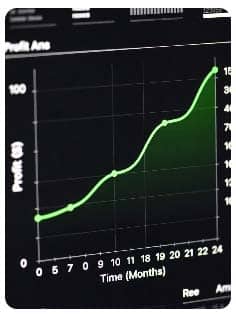
Long term profit
Long term profit

Why I Put Risk Before Profit

If you’ve followed my blog or watched any of my live trading sessions, you’ll know that I regularly talk about risk management.

That isn’t because it sounds good.

It’s because I believe it is the foundation of successful trading.

There is no point making excellent trades if poor discipline eventually gives all the profits back.

Learning how to control losses is one of the most valuable skills any trader can develop.

Final Thoughts

Many people think successful trading is about finding the perfect strategy.

In my experience, it is just as much about protecting your trading bank and also protecting your confidence.

Every trader experiences losing trades.

The important thing is how those losses are managed.

By controlling risk, remaining disciplined and thinking long term, you give yourself the best chance of becoming a consistent trader.

If you would like to learn more about my approach to tennis trading, my TradeShark Tennis Trading Course explains the strategies and risk management techniques I use when trading ATP and WTA matches. You can also follow my daily Trading Tips service to see how I identify and manage real trading opportunities.

Other FAQ Articles

Can beginners learn Tennis Trading?

Why tennis trading is lower risk than betting

Why Trading Isn’t The Same As Betting

How To Manage Risk When Trading Tennis 1

How To Manage Risk When Trading Tennis Read More »

Why Trading Isn’t The Same As Betting

One of the biggest misconceptions I come across is that trading and betting are basically the same thing.

When I tell people what I do for a living, they will say, “Oh, so you’re a professional gambler?”

While both involve sports markets, the way traders approach those markets is very different from the way most people place bets.

Understanding that difference is one of the most important steps a new trader can take.

The Traditional Betting Mindset

Most bettors start by asking a simple question:

“Who is going to win?”

They study the match, or just back their favourite team, make their prediction and place a bet.

If their prediction is correct, they win.

If their prediction is wrong, they lose.

The entire outcome depends on accurately predicting the final result.

Once the bet is placed, there is often very little involvement until the match ends.

Gambler
Gambler

The Trading Mindset

When I trade tennis, my first question is also:

“Who is going to win?”

After that, I am asking:

“How competitive is the other player likely to be?”

This is a subtlety different way of looking at a match.

A trader is interested in price movements during certain periods of the match, rather than simply predicting the winner.

The objective is to enter the market at one price and exit at another.

Trader
Trader

You Don’t Need To Predict The Final Winner

This is one of the biggest differences between trading and betting.

Many successful tennis trades are completed long before the match finishes.

For example, a trader may enter a position expecting a player’s price to shorten after a break of serve.

Once that price movement occurs, the trader can close the position and secure a profit.

The eventual winner of the match may become largely irrelevant.

The trade has already been completed.

Risk Can Be Managed Throughout The Trade

Another major difference is the ability to manage the trade and therefore manage the risk.

When betting, many people place a bet and simply hope the result goes their way.

Traders take a different approach.

If a trade is not developing as expected, it can often be closed for a controlled loss.

Likewise, profits can often be secured before the match is over.

This ability to actively manage positions is one of the reasons I prefer trading to traditional betting.

Trading Is About Consistency

Many bettors focus on finding the biggest winner.

Traders tend to focus on consistency.

The goal is not to find a miracle selection every week.

The goal is to repeatedly identify situations where the risk and reward are favourable.

Over time, a series of sensible decisions can produce much better results than constantly chasing large wins.

Emotions Play A Smaller Role

Every trader experiences emotions.

However, successful trading relies on following a plan rather than reacting emotionally.

Many bettors become attached to their selections.

They want, or even need, their player to win.

Traders are usually more concerned with what the market is doing.

If the market gives a reason to exit, the trade is closed.

There is no need to remain loyal to a particular player or opinion.

Why New Traders Often Struggle

One of the biggest mistakes beginners make is approaching trading with a betting mindset.

They focus entirely on predicting winners.

They ignore risk management.

They stay in losing positions for too long.

They become emotionally attached to trades.

In reality, successful trading often has far more in common with managing risk than predicting sporting outcomes.

New trader
New Trader

Final Thoughts

While trading and betting both involve sports markets, they are very different activities.

Betting is largely about predicting results.

Trading is about identifying opportunities, managing risk and taking advantage of price movements.

This shift in mindset is often the point where beginners start to see the market differently.

Once you stop thinking like a bettor and start thinking like a trader, the opportunities become much easier to recognise.

If you would like to learn more about my approach to tennis trading, take a look at the TradeShark Tennis Trading Course. I also provide daily ATP and WTA Trading Tips that highlight potential trading opportunities and explain the reasoning behind them.

Other FAQ Articles

Can beginners learn Tennis Trading?

Why tennis trading is lower risk than betting

How To Manage Risk When Trading Tennis

Why Trading Isn't The Same As Betting 2

Why Trading Isn’t The Same As Betting Read More »

We are using cookies on this site

Please click "Accept" if you accept our tracking cookies. You can also decline the tracking, so you can continue to visit our website without any data being sent to third party services.